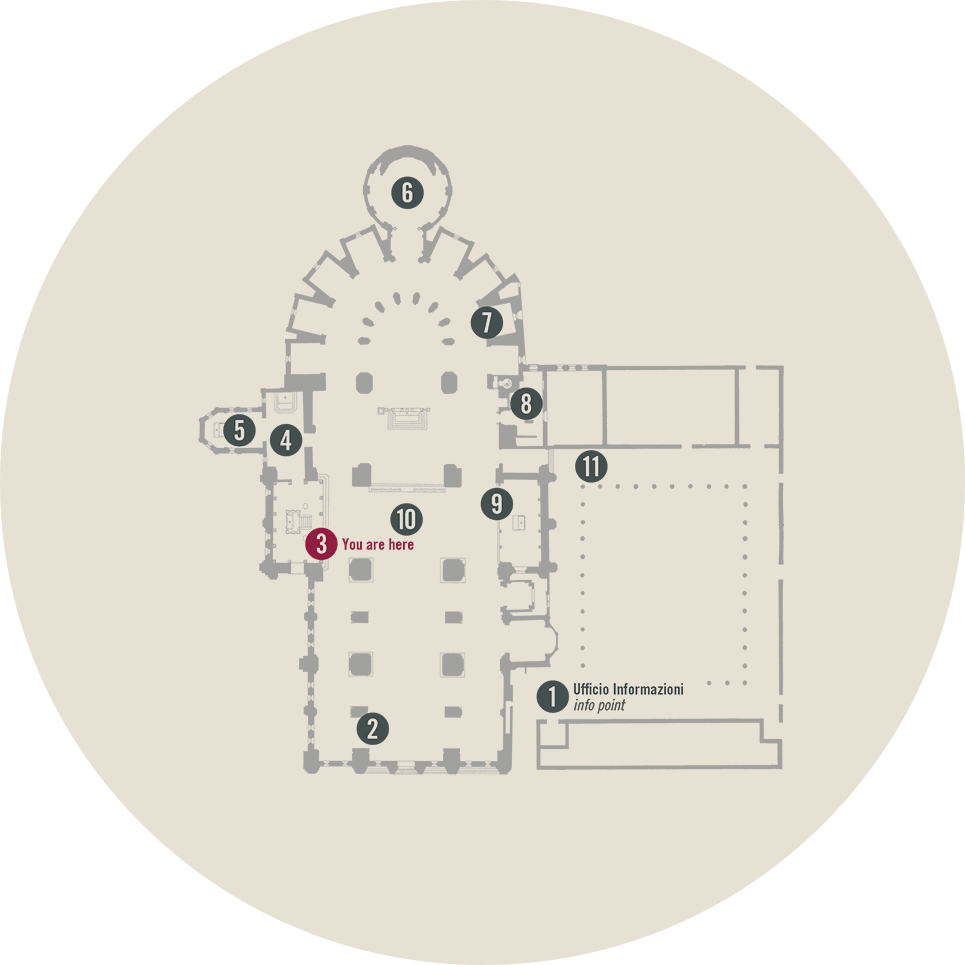
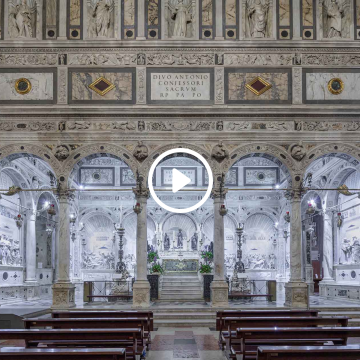
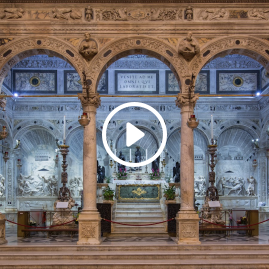
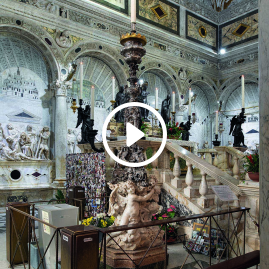
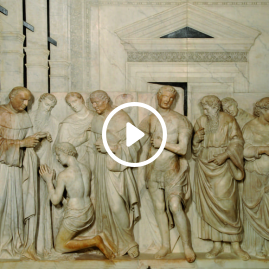
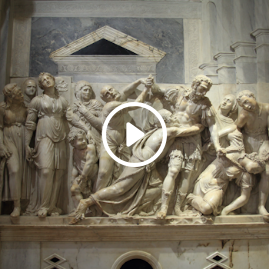
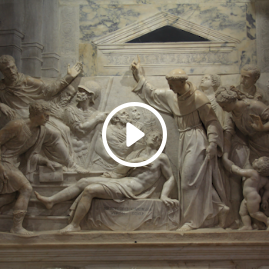
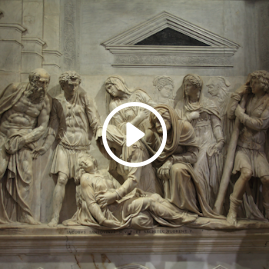
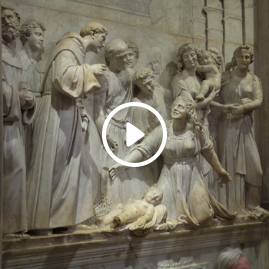
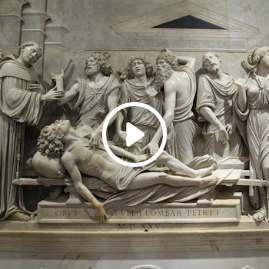
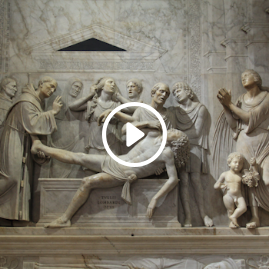
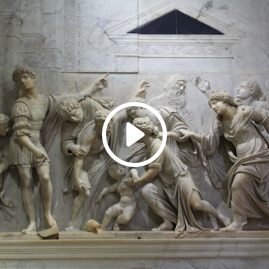
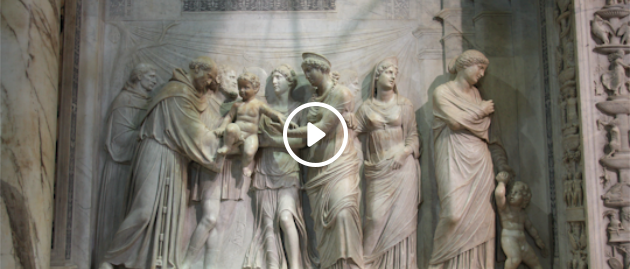
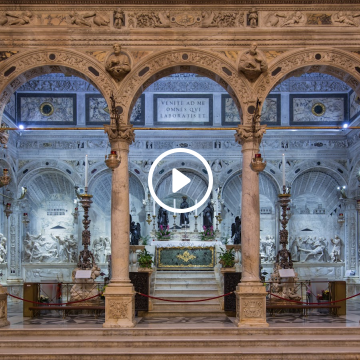
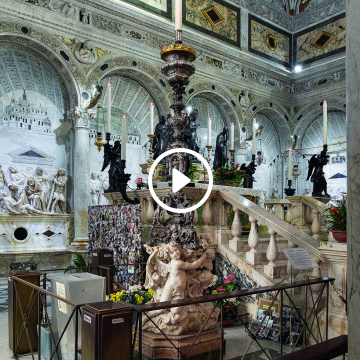
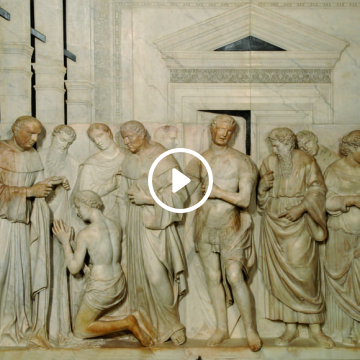
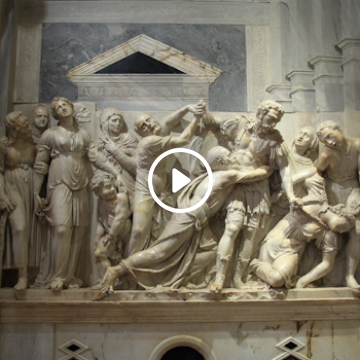
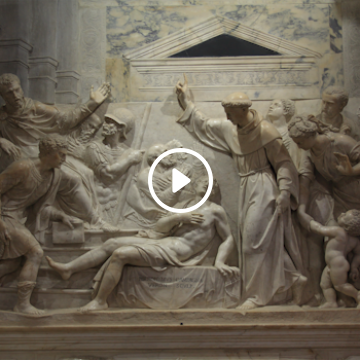
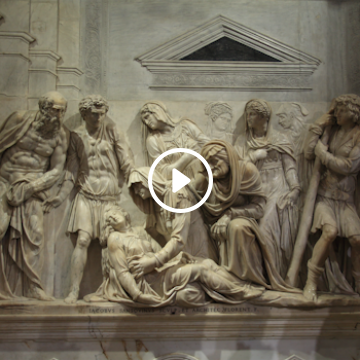
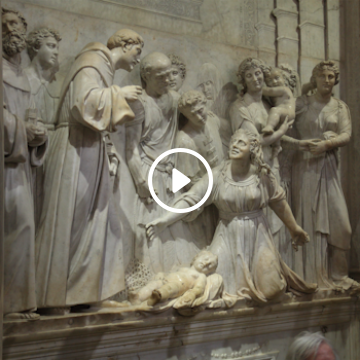
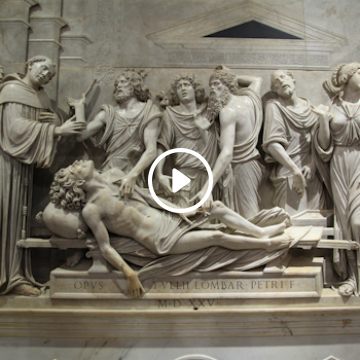
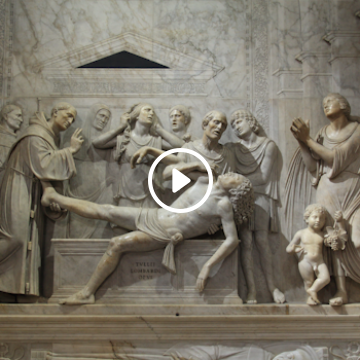
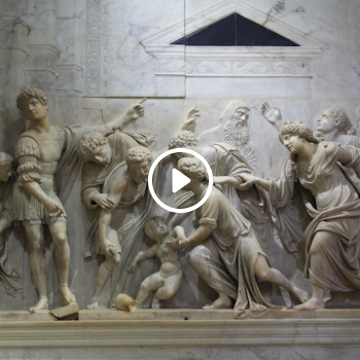
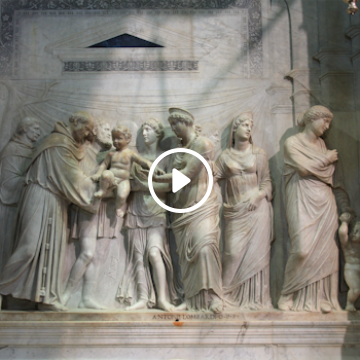
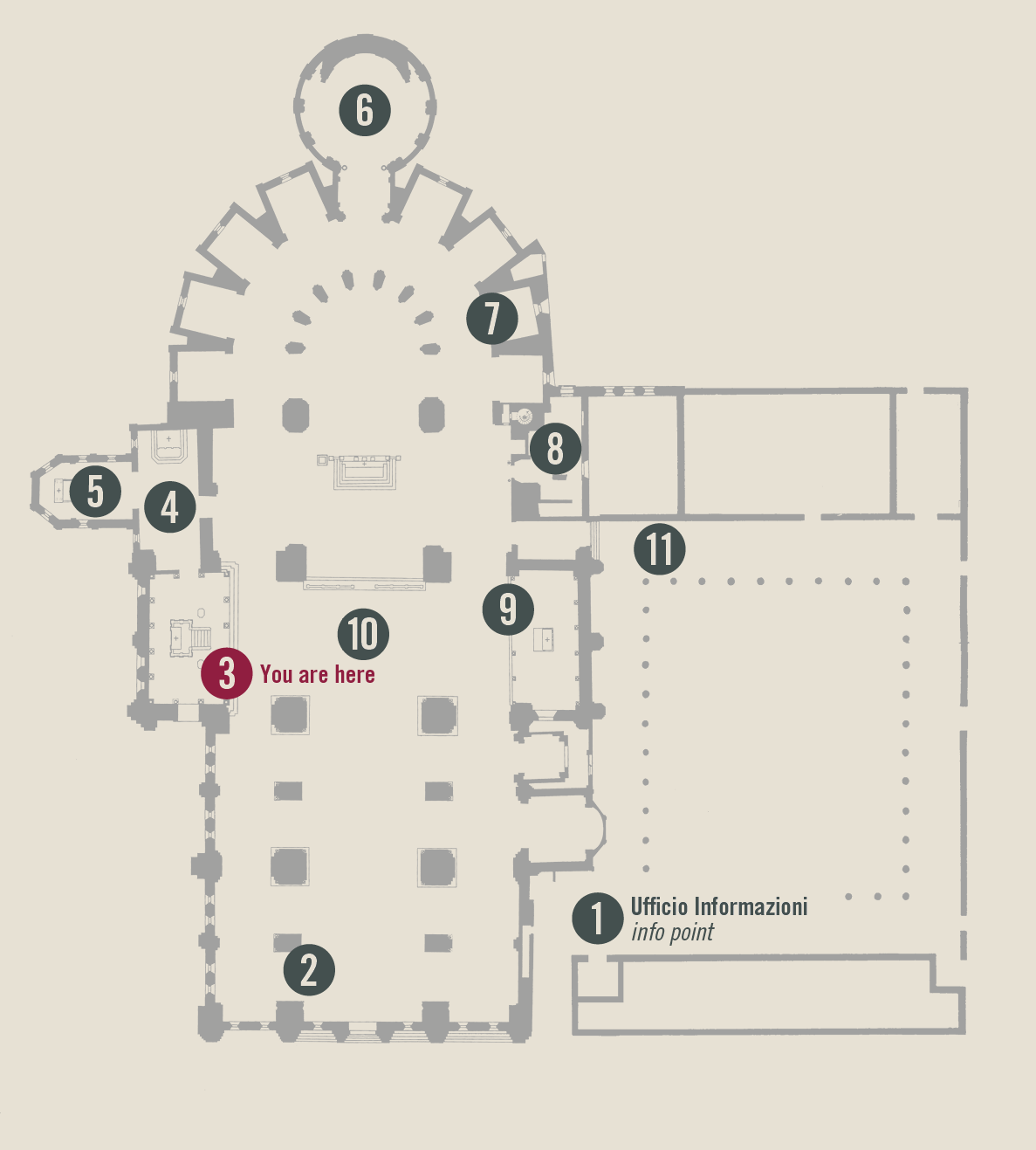
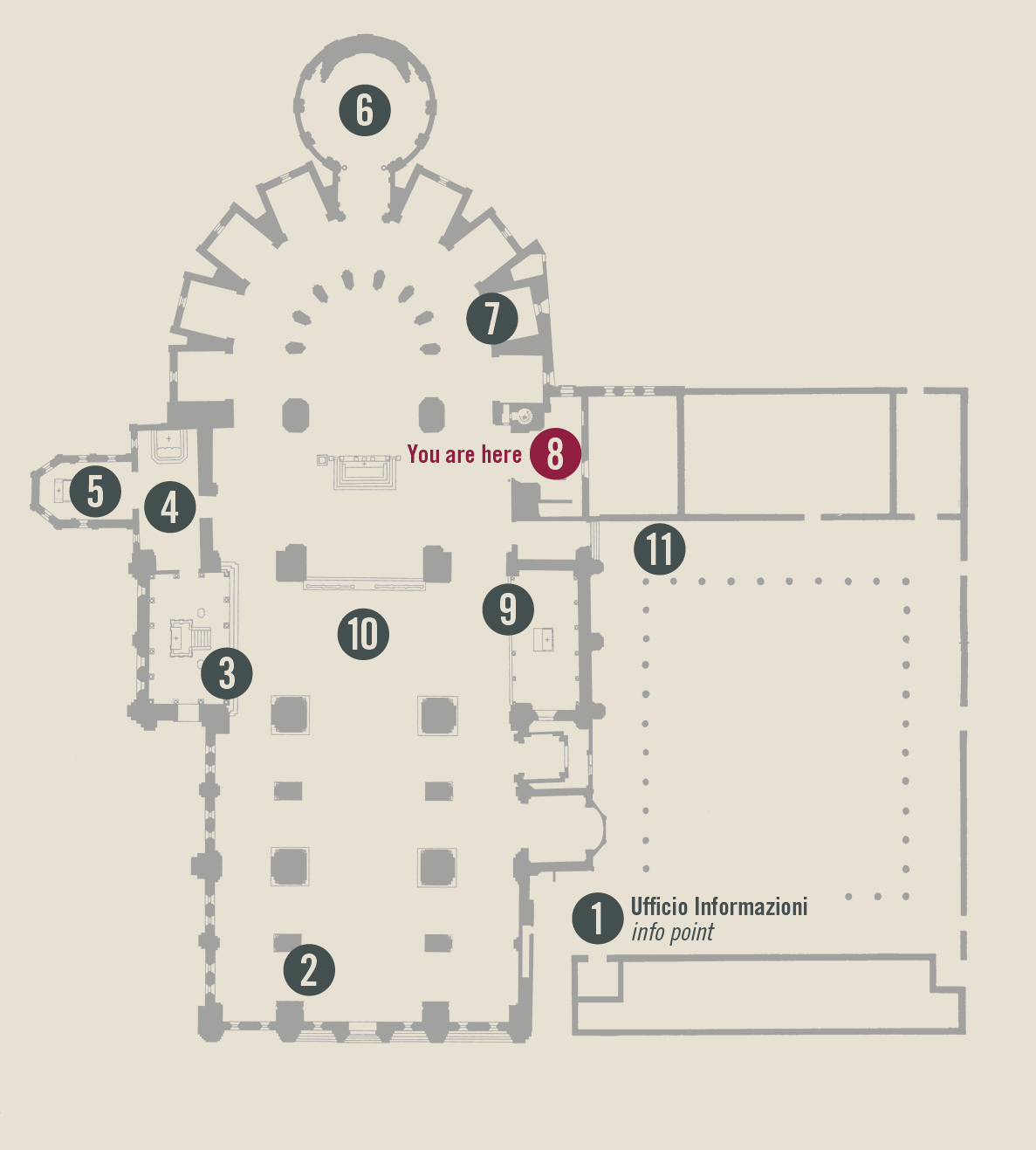
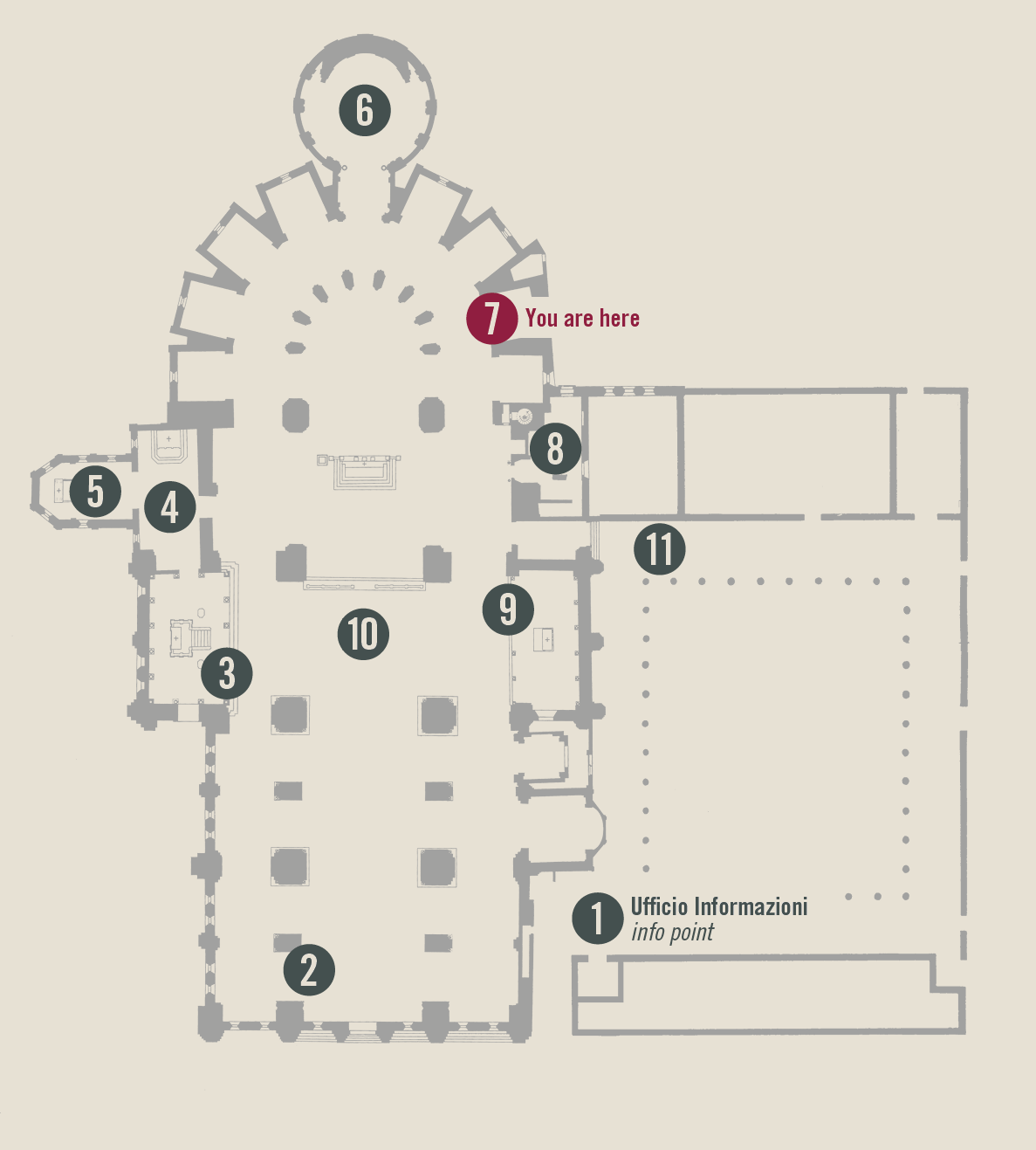
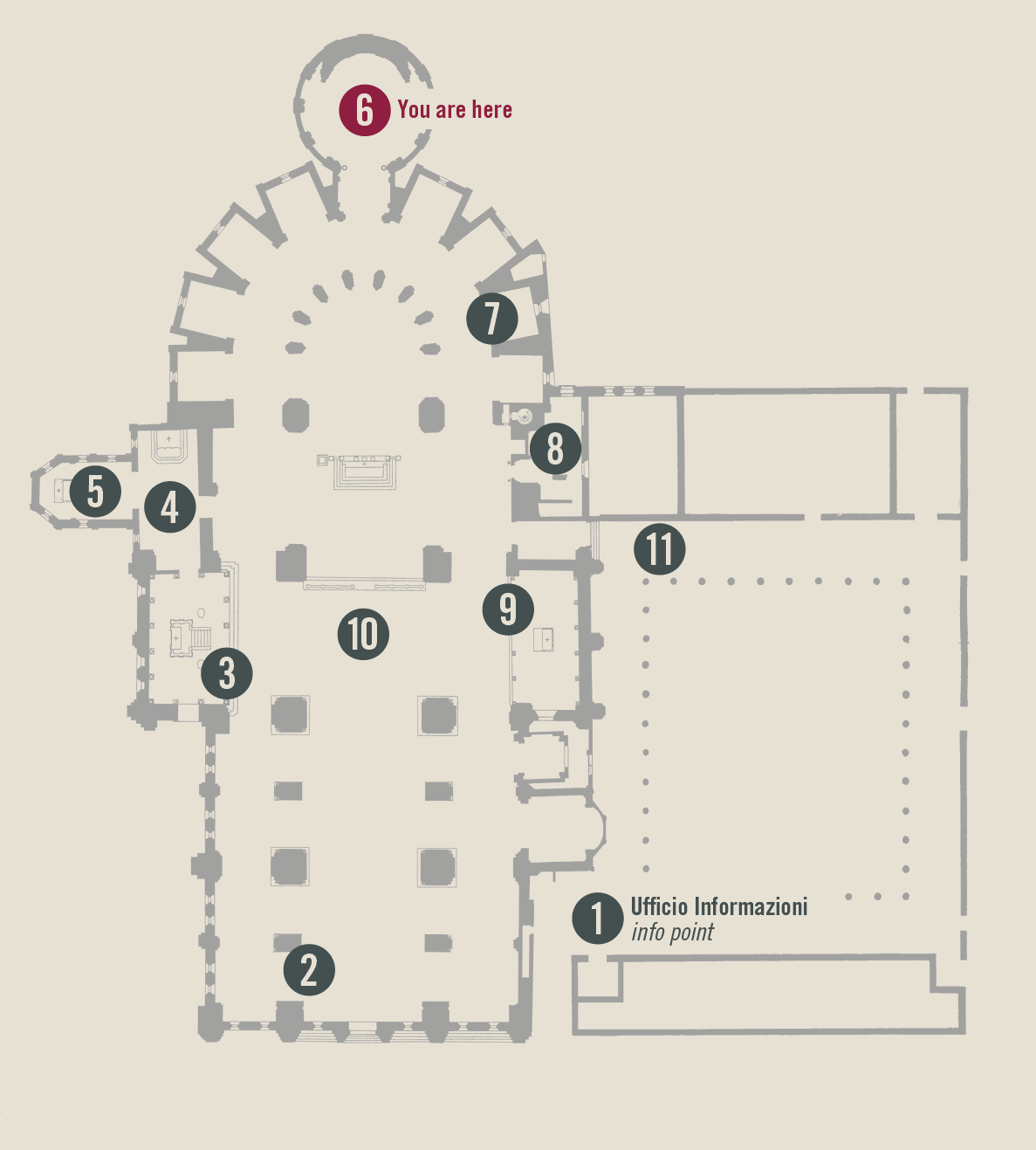
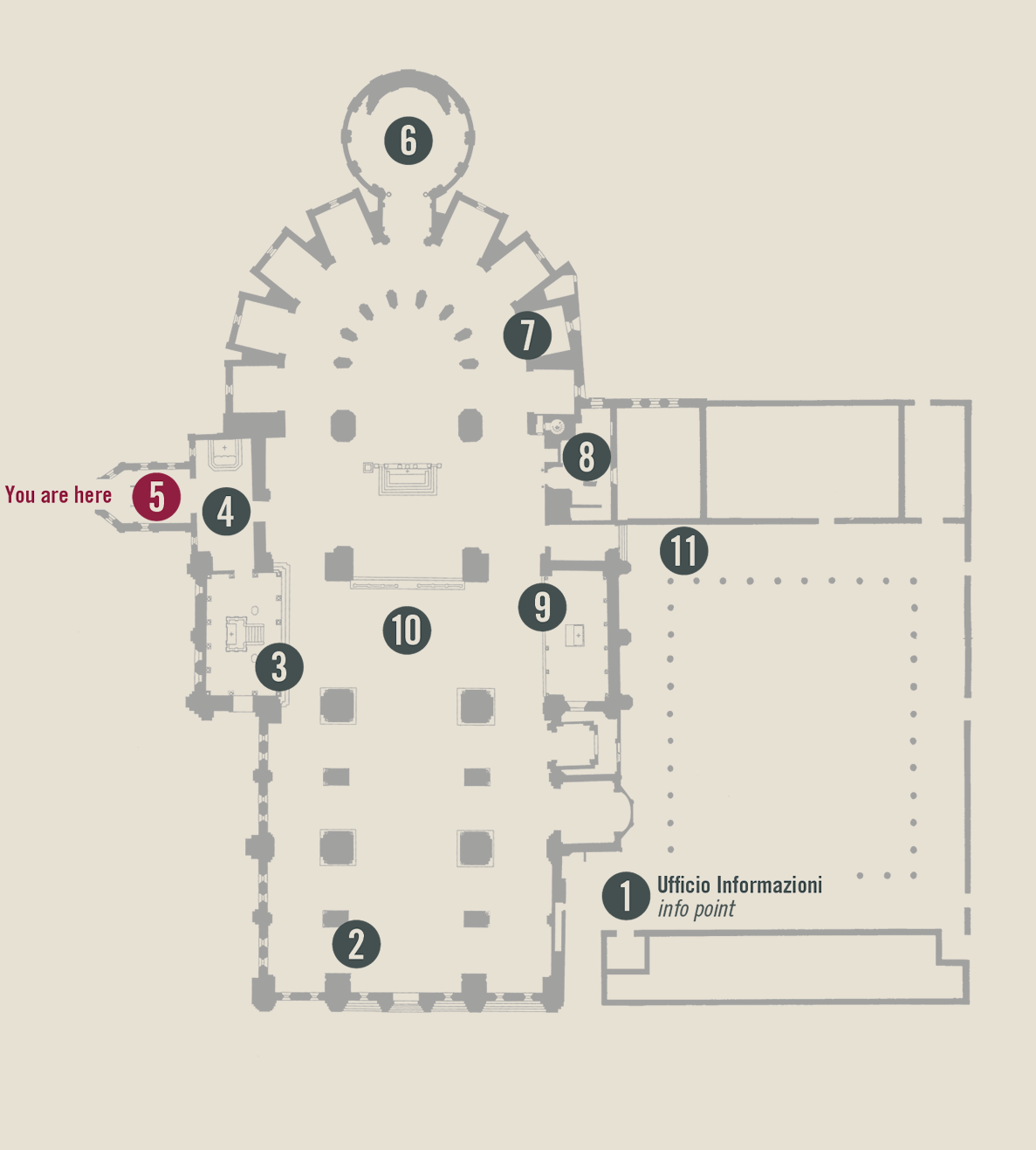
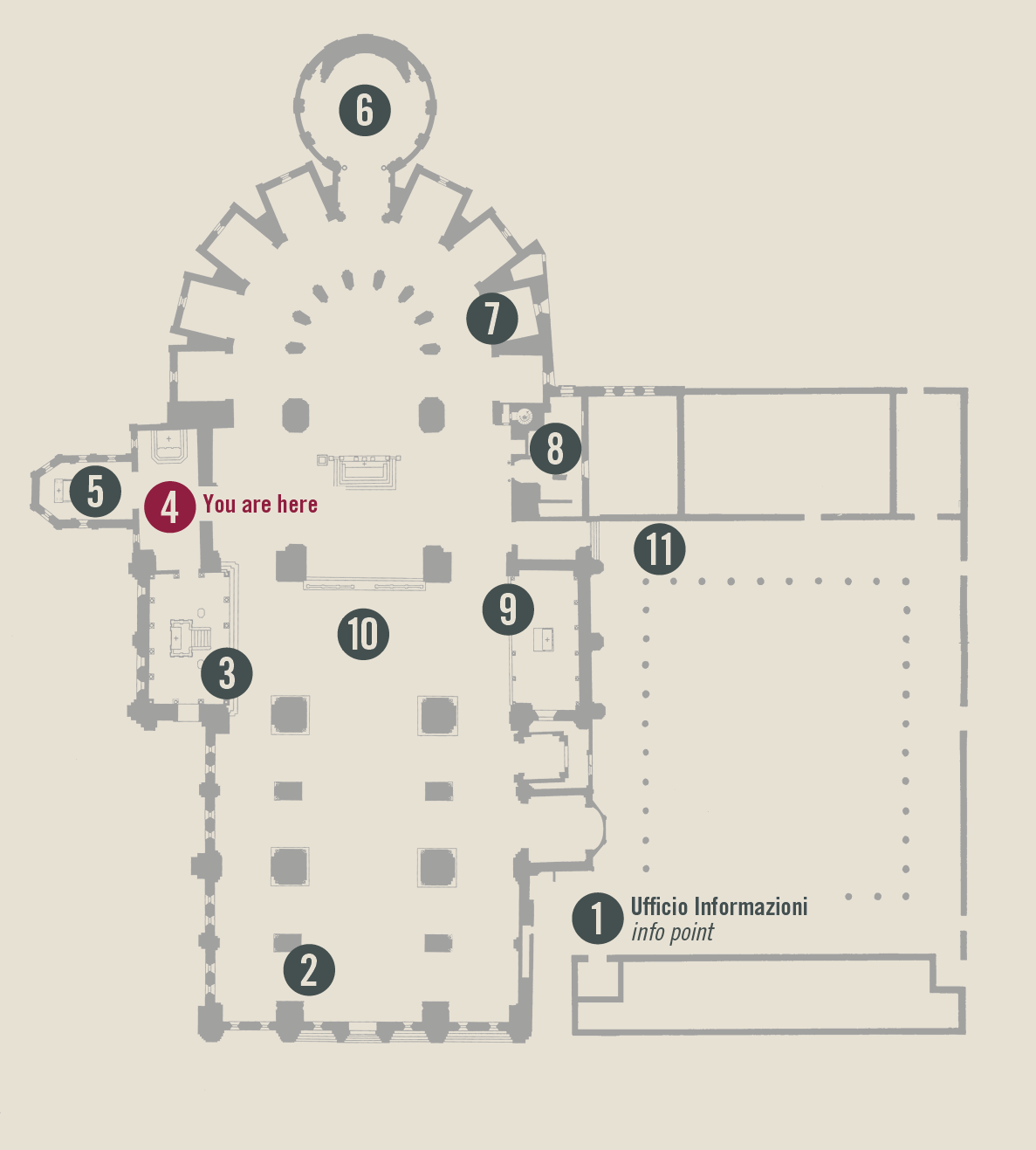
The Chapel of St. Anthony houses the Saint’s mortal remains, which were moved here in 1350. It is the second chapel dedicated to St. Anthony, and was built to replace the original Gothic-style chapel frescoed in the 14th century by Stefano da Ferrara, now completely lost. Entirely covered in marble, the chapel has a 5-arched loggia surmounted by a double attic. In the topmost attic, from left to right, we find: St. Justine, St. John the Baptist, St. Anthony in the center, St. Prosdocimo and St. Daniel. In the center, the chapel is occupied by the Saint’s Ark: this is a type of raised tomb. On the back of the ark, devotees, as a sign of affection and reliance on St. Anthony’s intercession, rest their hands on a precious marble slab which has become smooth and polished through centuries of devotion. The altar, from the late 16th century, is the work of Titian Aspetti; it is decorated with bronze statues of Saints Bonaventure and Ludwig of Anjou next to St. Anthony. On the walls all around the Tomb are 9 marble high-reliefs depicting St. Anthony’s miracles.
3.1 The structure
3.2 Symbolism in the Chapel
3.3 St. Anthony receives the Franciscan Habit
3.4 The Miracle of the Jealous husband
3.5 The Miracle of the young man resuscitated by the Saint
3.6 The Miracle of the resuscitation of the drowned girl
3.7 Saint Anthony resuscitates a drowned child
3.8 The Miracle of the usurer
3.9 The Miracle of the reattached foot
3.10 The Miracle of the unbroken glass
3.11 The Miracle of the speaking infant
3.1 The structure
3.2 Symbolism in the Chapel
3.3 Anthony receives the Franciscan Habit
3.4 The Miracle of the Jealous husband
3.5 The Miracle of the young man resuscitated by the Saint
3.6 the Miracle of the resuscitation of the drawned girl
3.7 Saint Anthony resuscitates a drawned child
3.8 The miracles of usurer’s heart
3.9 The Miracle of the reattached foot
3.10 The Miracle of the unbroken glass
3.11 The Miracle of the speaking infant
To access the guide of the Basilica of Saint Anthony of Padua, enter your name and email address